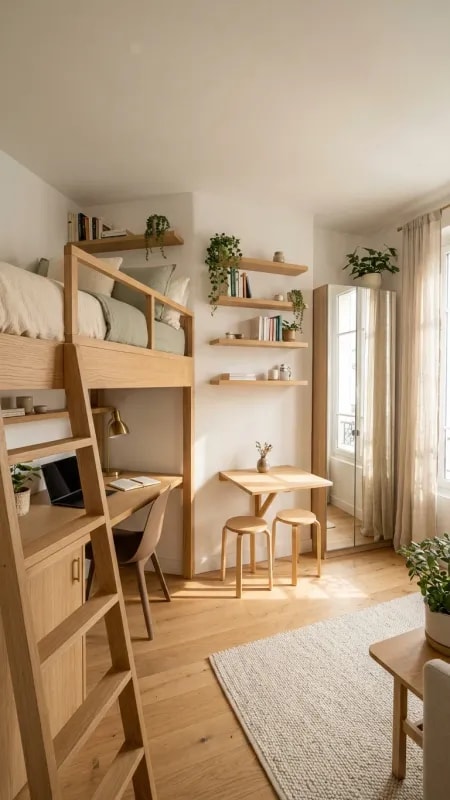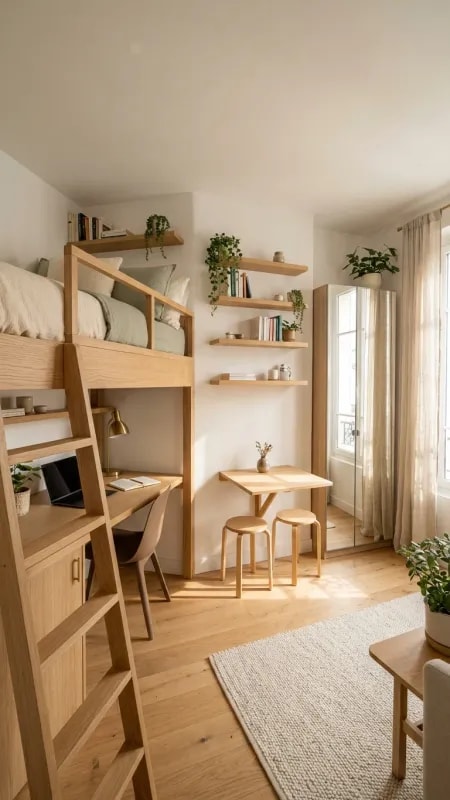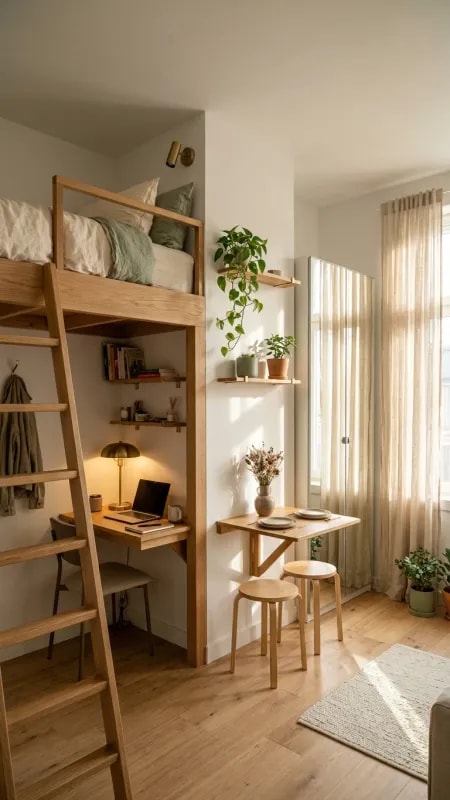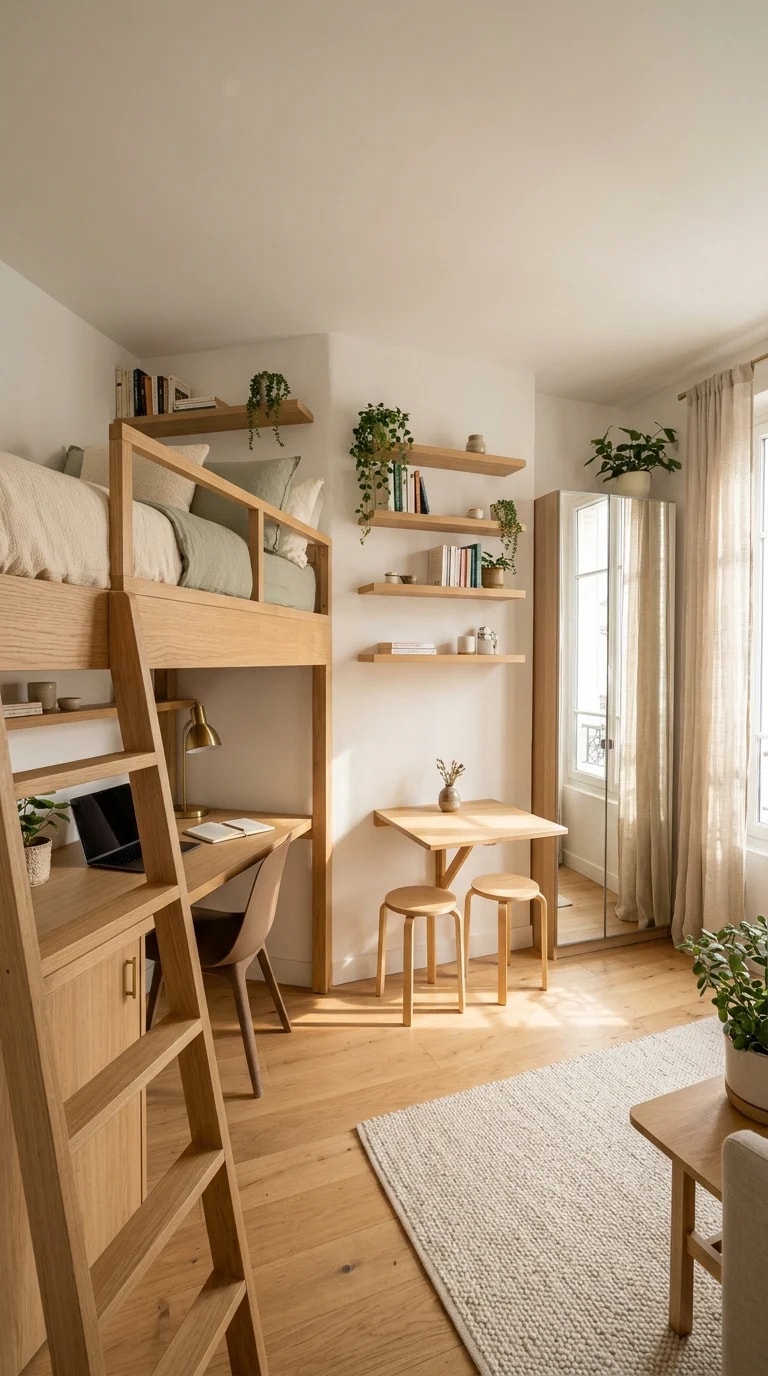
A sleeping platform can swallow a room or save it, and this corner proves the second case. A pale oak deck, reached by a slim ladder, claims only the upper third of the wall, leaving the floor below free for a desk, a chair, and a laptop that has clearly found its permanent home. From the doorway the eye reads three rooms at once — bedroom above, study beneath, a small table with two stools tucked to the side — yet the footprint is barely wider than a hallway.
Vertical design only works when each layer keeps its own light, and that is the real achievement here. The window and French door on the right feed all three zones at once: sun streaks across the oak planks, catches the white bedding, and still reaches the desk, so nothing below feels like a cave. Sheer curtains soften the glare without closing the room off, and the shallow depth of the platform means daylight never has far to fall before it lands on the floor.
The palette does the quiet labor. Honey-toned wood warms cream walls, white textiles bounce daylight back into the corners, and a wash of muted sage — in the trailing plants, a cushion, the rug — keeps the scheme from turning sugary. Wall-mounted shelves run horizontally to counter the vertical thrust of the ladder, while vines spilling over their edges blur the hard geometry. A single textured rug anchors the stool-and-table grouping so it reads as a small dining room rather than leftover floor.
If you borrow the idea, borrow the discipline too. Keep the under-bed zone low and shallow — a desk and a slim chair, not a wardrobe — and mount whatever you can on the wall so the floor stays visible. Choose a ladder you actually enjoy climbing and fix it to the frame; a hooked-top ladder that shifts underfoot is how lofts get abandoned. Guardrails matter more than they photograph. And leave the space beside the sleeping platform open at eye level, because a solid panel there will make the upper level feel like a shelf instead of a bed.
What makes the room feel generous is not square footage but order. Everything sits where it is used, nothing blocks the light, and the eye travels from the ladder to the window without tripping. Compact contemporary design at its best looks less like a compromise and more like a decision — one small room, calmly asked to do three jobs, and doing all three well.