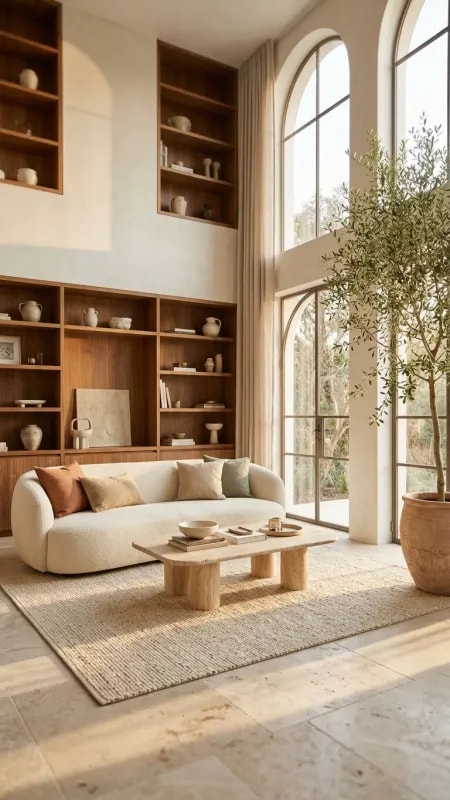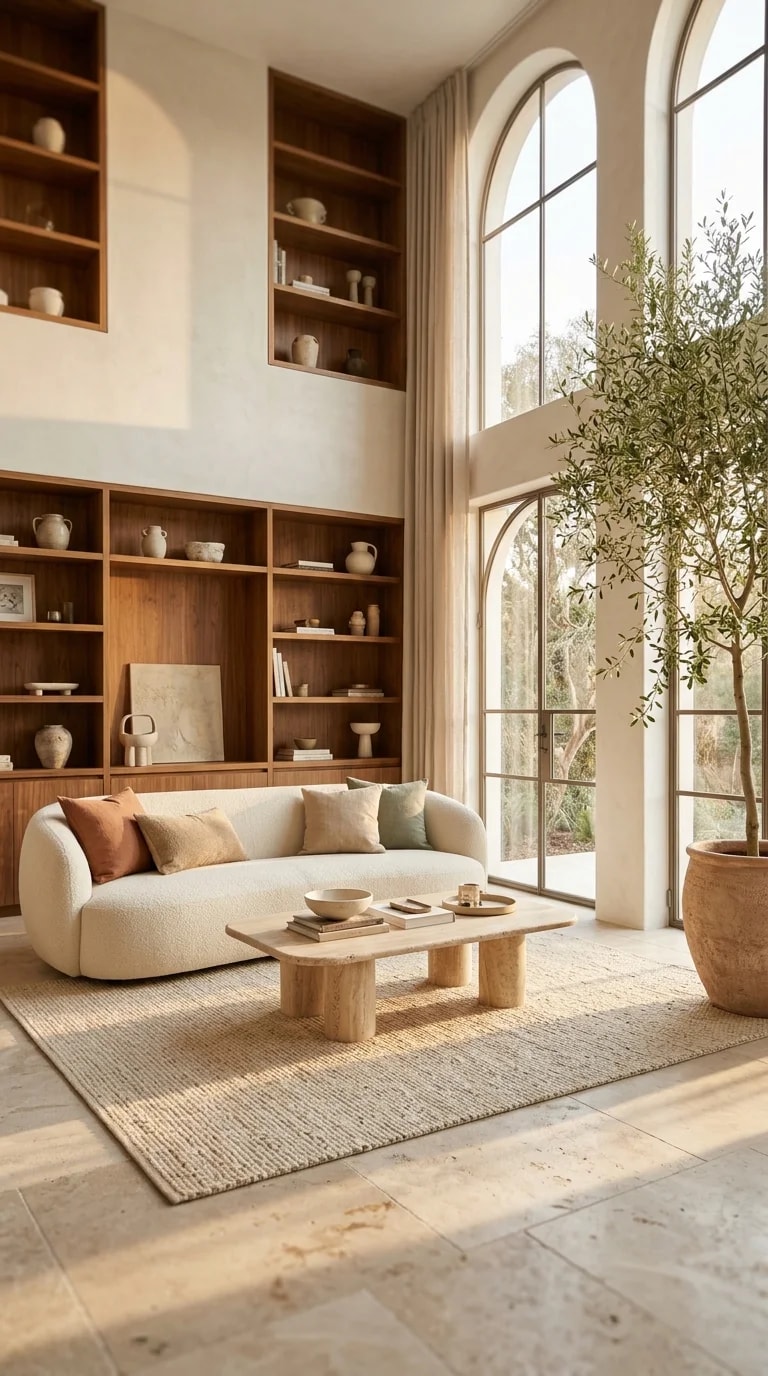
Scandinavian home design has a reputation problem. Somewhere between the design blogs and the flat-pack showrooms, the look got reduced to white walls, white floors, and a single lonely chair. This living room is the corrective. A curved cream sofa softens the center of the room, a low travertine table anchors it, and a chunky woven rug pulls everything into a comfortable huddle. Warm oak shelving climbs the left wall, and tall arched windows on the right let in the kind of late afternoon light that makes even stone look tender. The mood is calm and organic, quietly luxurious without ever announcing itself.
The first thing to notice is that almost nothing here is a flat color. The sofa is boucle, the rug is thick wool, the table is porous travertine with visible pitting, the shelving has open grain, and the planter is unglazed terracotta. Color does very little work in this room; texture does all of it. The palette stays inside a narrow band of cream, sand, warm oak, sage, and clay, which is exactly why the eye can relax. When every surface offers a slightly different touch, a restrained scheme reads as rich rather than empty.
Storage is the other quiet hero. The built-in oak unit runs floor to ceiling and carries a real load: books, ceramics, a few vases, framed art leaning rather than hanging. What keeps it from feeling cluttered is the spacing. Objects are grouped in loose threes and fours, with empty shelves left deliberately empty, so the wood itself becomes part of the composition. Solid storage on one side balances the glass and greenery on the other, and the room stays symmetrical in weight without being symmetrical in form.
Light decides everything else. The arched windows are left mostly bare, with only the thinnest sheer at the edge, and the stone floor takes the sun squarely, throwing long shadows across the room by mid-afternoon. A large olive tree in the corner does more than decorate; it puts something alive and slightly unruly against all that careful geometry, and the green outside the glass echoes it back. If you want to borrow from this room, start with one generous anchor piece, layer three or four natural textures over it, keep the floor plan open enough for light to travel, and let a plant grow a little wilder than feels polite.