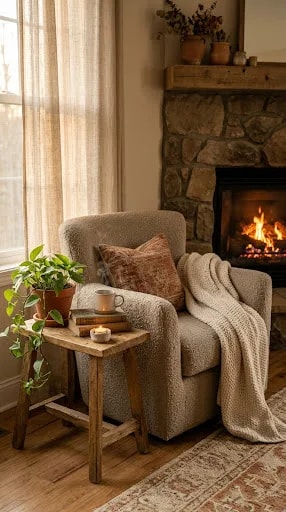
The beige armchair gets the credit. It sits between a stone fireplace and a window dressed in sheer curtains, a rust-patterned pillow at its back and a cream knit throw over one arm. But look closer and you’ll notice the quiet engine of the whole scene: a small wooden side table holding a plant, a stack of books, a mug, and a lit candle. Remove it and the corner becomes a place to sit. Keep it and the corner becomes a place to stay.
That difference is the arm’s reach rule of cozy design. Comfort collapses the moment you have to stand up for the thing you want. The table is not décor; it is a promise that the next hour requires no effort. Everything on it should answer a small, predictable need. The book stack says time is allowed. The mug says the body is considered. The candle, with its live flame, repeats the hearth’s warmth at eye level. The plant adds a green note against cream, beige, brown, rust, and stone gray, keeping the palette from going flat.
Notice how the light works, too. Daylight arrives soft through the sheer curtain on the left; firelight answers from the right. The chair sits in the overlap, and the table catches both—cool window light on the plant leaves, warm flicker on the mug and the pages of the top book. This is why the corner feels calm rather than staged. The patterned rug on the wood floor anchors the furniture, the throw and pillow add texture you can feel before you touch them, and the mantel repeats the table’s logic with dried flowers and small candles. Coziness is rarely one perfect object. It is a set of small, related ones, arranged where the body will actually be.
To copy the effect, start with the chair and measure outward. The table should sit level with or just below the seat’s arm, wide enough for a book, a drink, and one object that makes you smile—not so wide that it becomes a shelf. Keep the surface edited: three to five items, one of them living, one of them useful, one of them lit when the evening calls for it. Leave the floor beneath clear so the corner invites bare feet. Then resist the urge to add more. The most convincing cozy corners look slightly used, not fully styled, as if someone set down a mug and meant to come back. That is the real goal: a corner that anticipates your next small need before you do.