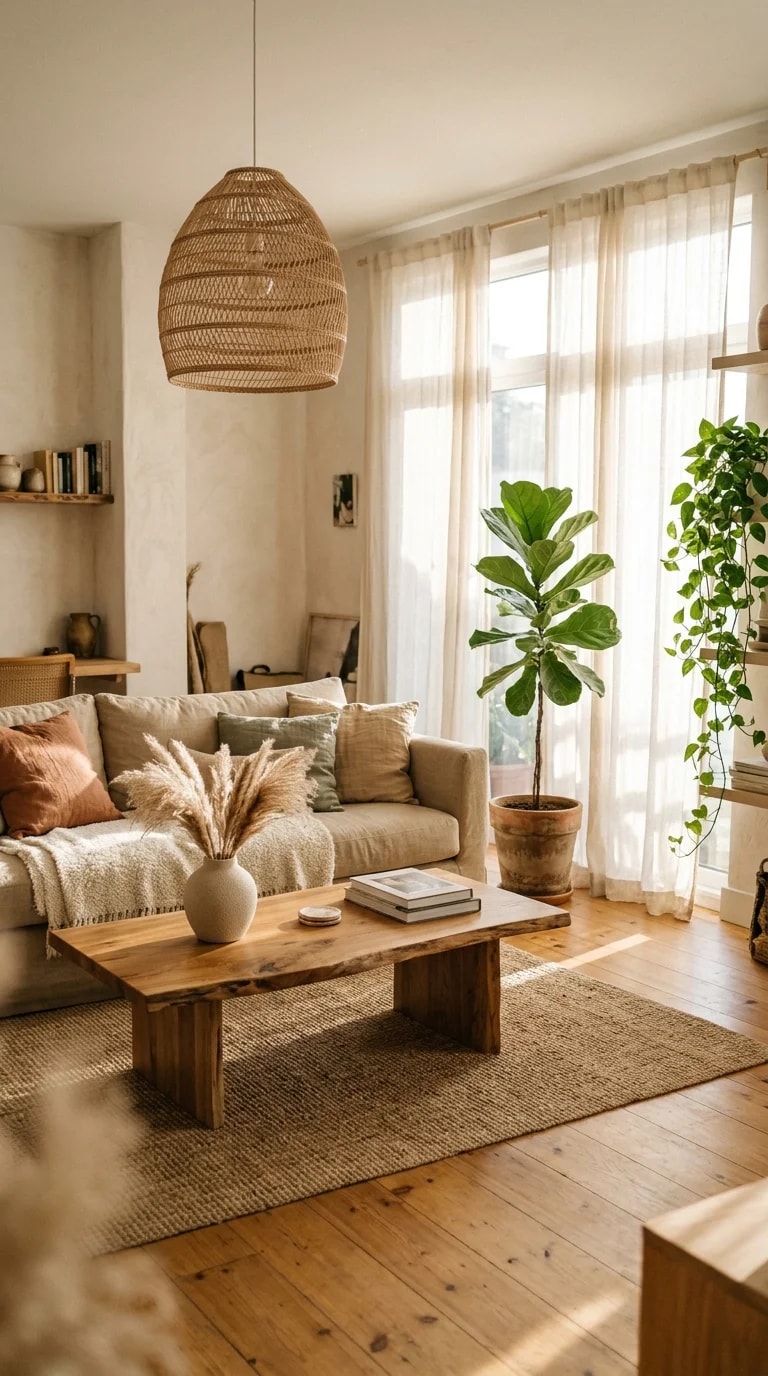
There is a particular kind of quiet that settles over a room like this one. Morning light slips through sheer white curtains and lands in soft, uneven patches on the floor. A low beige sofa anchors the lower half of the space, its cushions piled with terracotta and sage pillows that look collected rather than purchased together. In front of it sits a chunky wood coffee table with visible grain and a rounded, almost hand-carved edge. Nothing here matches exactly, and that is precisely why it works. Organic modern is not a shopping list; it is a set of instincts about warmth, texture, and restraint.
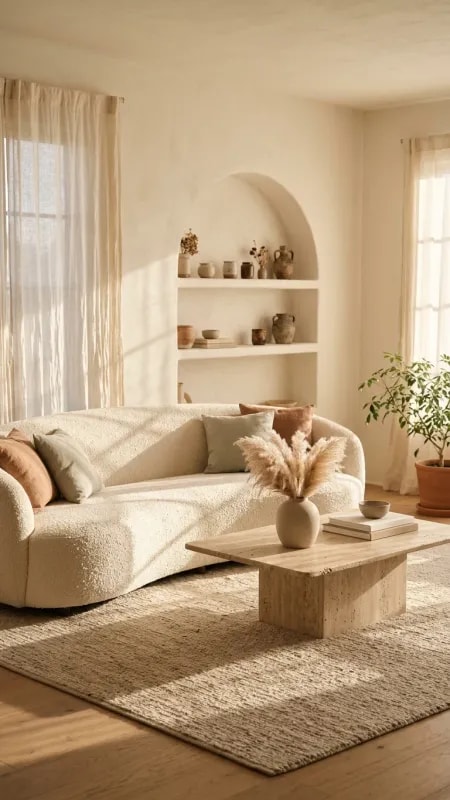
The palette does most of the heavy lifting. Cream, oatmeal, and honey-toned wood form the base, a trio that keeps the room bright without turning it clinical. Terracotta and muted green then enter as accents, small enough to feel accidental. The trick is proportion: let the neutrals cover roughly eighty percent of the surface area, then introduce color in objects you can move, like pillows, a vase, a stack of books. When the seasons change, so can the accents, without touching a single piece of furniture.
Texture is what separates a warm minimalist room from an empty one. Against the flat weave of the sofa fabric, a jute rug adds a coarse, earthy grain underfoot. A woven rattan pendant hangs above, its open lattice letting the light pass through instead of blocking it. Ceramics on the open shelves are matte and slightly irregular, the kind of pieces that look better with a fingerprint on them. A textured throw draped over the sofa arm softens the geometry of the frame. Layer at least three distinct materials in any visual zone and the room will read as inviting even before anyone sits down.
Light and greenery finish the composition. Sheer curtains are the quiet hero here, diffusing direct sun into a glow that flatters wood and linen alike, and they cost very little compared with the effect they produce. A potted fiddle-leaf fig in the corner brings height and a living green note, while a trailing plant softens a shelf edge that would otherwise feel rigid. Both are forgiving choices for a room with bright, indirect light.
What makes this space feel achievable is its editing. There is no statement chandelier, no gallery wall competing for attention. The chunky table is the one bold gesture, and everything else steps back to support it. If you are rebuilding a living room around this idea, start with the largest surfaces, floor, sofa, and table, in warm neutrals. Then add texture, then greenery, then color. Stop before it feels finished, and the room will keep feeling lived in.