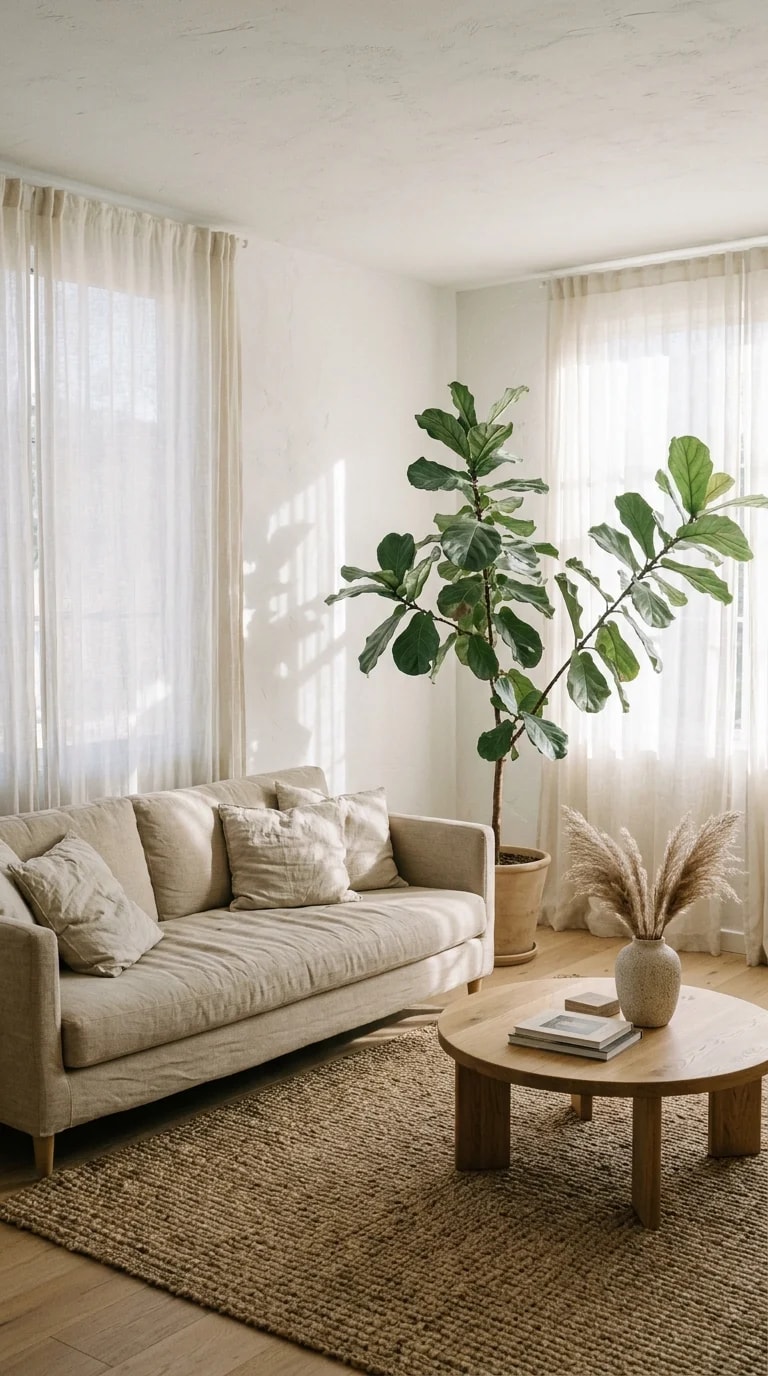
Light is the quietest material in a room, and it is the one most often left unplanned. In this vignette, two windows dressed in sheer linen soften a bright exposure into something closer to dusk at noon, throwing leafy shadows across a plain white wall. Nothing in the scene is expensive-looking in an obvious way, yet the effect reads as quietly luxurious. That is the trick worth copying: before you buy a single piece of furniture, decide how the daylight should land. A layer of gauze at the glass costs little and changes everything.
The composition itself is a loose triangle, and triangles are what make relaxed rooms feel intentional. A low beige sofa anchors the left, a tall fiddle-leaf fig rises at the center-right, and the round coffee table closes the shape in the foreground. Each element sits at a different height, so the eye travels instead of stalling. If your own seating area feels flat, look for this rhythm — something low and horizontal, something tall and living, something round and reachable. You do not need more furniture. You need more variation in height and shape.
Texture carries the palette here, because a room this neutral would otherwise read as empty. The jute rug is coarse, the sofa linen is soft, the terracotta pot is matte and slightly dusty, and the pampas grass in the foreground vase is practically weightless. Cream, sand, and taupe only work when they are interrupted by grain, weave, and shadow. Pale honey-toned floors do the rest, warming the daylight so the room never tips toward cold. When you build a neutral scheme, count your textures the way you would count colors.
The plant deserves its own note. A fiddle-leaf fig in a plain terracotta pot is doing structural work in this corner — it fills vertical space that would otherwise be blank wall, and its broad leaves cast the shadows that make the room feel alive. Give it bright, indirect light near a window, rotate it a quarter turn every few weeks, and resist the urge to move it once it settles in. A single healthy plant, generously scaled, reads better than a shelf of small ones.
What this room really demonstrates is restraint with a pulse. Books stacked rather than shelved, a vase of dried grass instead of a floral arrangement, curtains that filter rather than block — every choice removes effort from the space. The result is a living room that asks nothing of you, which is precisely the point of a dream home.